Canada has a five‑year window to turn its lithium potential into a globally competitive, ESG‑premium battery materials industry. These two half‑day online workshops bring together leading RTOs, SMEs, and federal partners to co‑design the implementation plan for a Strategic Response Program supporting Canada’s Battery Value Chain
Attendees will work directly with NRC, NRCan, ISED, and industry peers to define how Canada can close the TRL 6–8 gap, build integrated lithium‑to‑CAM hubs, and strengthen the country’s position as a trusted supplier of low‑carbon battery materials.Participants can expect:
Purpose:
Day 1 focuses on hearing directly from Canadian SMEs about the operational, technical, ESG, and commercialization needs that must guide Canada’s lithium‑to‑CAM scale‑up. SMEs will outline what they require from hub design, pilot access, ESG pre‑certification, and market engagement to accelerate domestic growth and global readiness. NRC, RTOs, and federal teams will participate as technical advisors and listeners to capture these priorities.
Outcome:
A consolidated set of SME‑driven requirements forming the foundation for the Strategic Response Program and informing Phase 0 and Phase 1 mobilization.
Purpose:
Day 2 turns insight into action, as NRC, RTO, and federal teams present concrete responses to SME needs captured on Day 1. Participants will validate delivery frameworks for all four BVC interventions: Integrated Hubs, Virtual Pilot Network & SME Fast‑Track, ESG Benchmarking & Battery Passport Readiness, and Commercialization & Market Access.
Outcome:
A unified Strategic Response Program Implementation plan confirming roles, timelines, and partner commitments to accelerate Canada’s lithium‑to‑CAM leadership under NRC’s coordinated national approach.
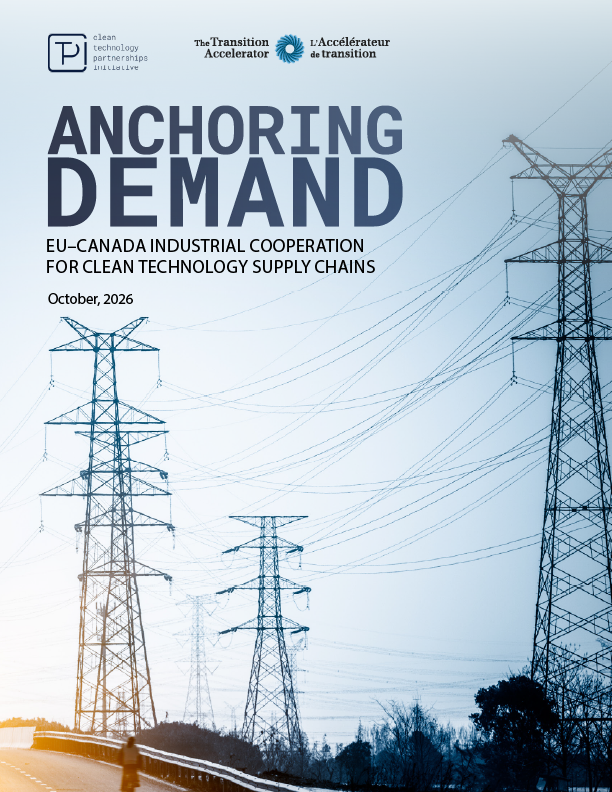
With Canada and Europe facing major challenges to their industrial base, the deepening economic relationship between the two in the “Alliance for the Future” presents an opportunity for shared prosperity and strategic resilience. Making the most of the opportunity will require innovative thinking to harness the power of partnerships.

While battery ecosystems in both nations are inherently linked to the automotive sector, batteries are a key technology for countless industries, from power tools to medical devices, from mobile robots to drones, and from renewable energy systems to defence technology. Therefore, it is of the utmost importance for both countries to establish a resilient battery supply chain. Looking at respective priorities and emerging opportunities, we can compare them and put forward some recommendations on further connecting the German and Canadian battery ecosystems.
At this week’s Investment Summit in Toronto, Canada is pitching itself to the world as a stable, investable economy with the resources, talent, and major projects global capital is looking for.

Accelerate welcomes yesterday’s Spring Economic Update (SEU) and the federal government’s commitment to positioning Canada as a premier global destination for investment.